

The stack
The desktop app, SDKs, CLI, wallet engine, and MCP/AI tooling are open source (MIT) and inspectable on GitHub; the browser extension and the maker-side RFQ engine are not public today.
Integration layer
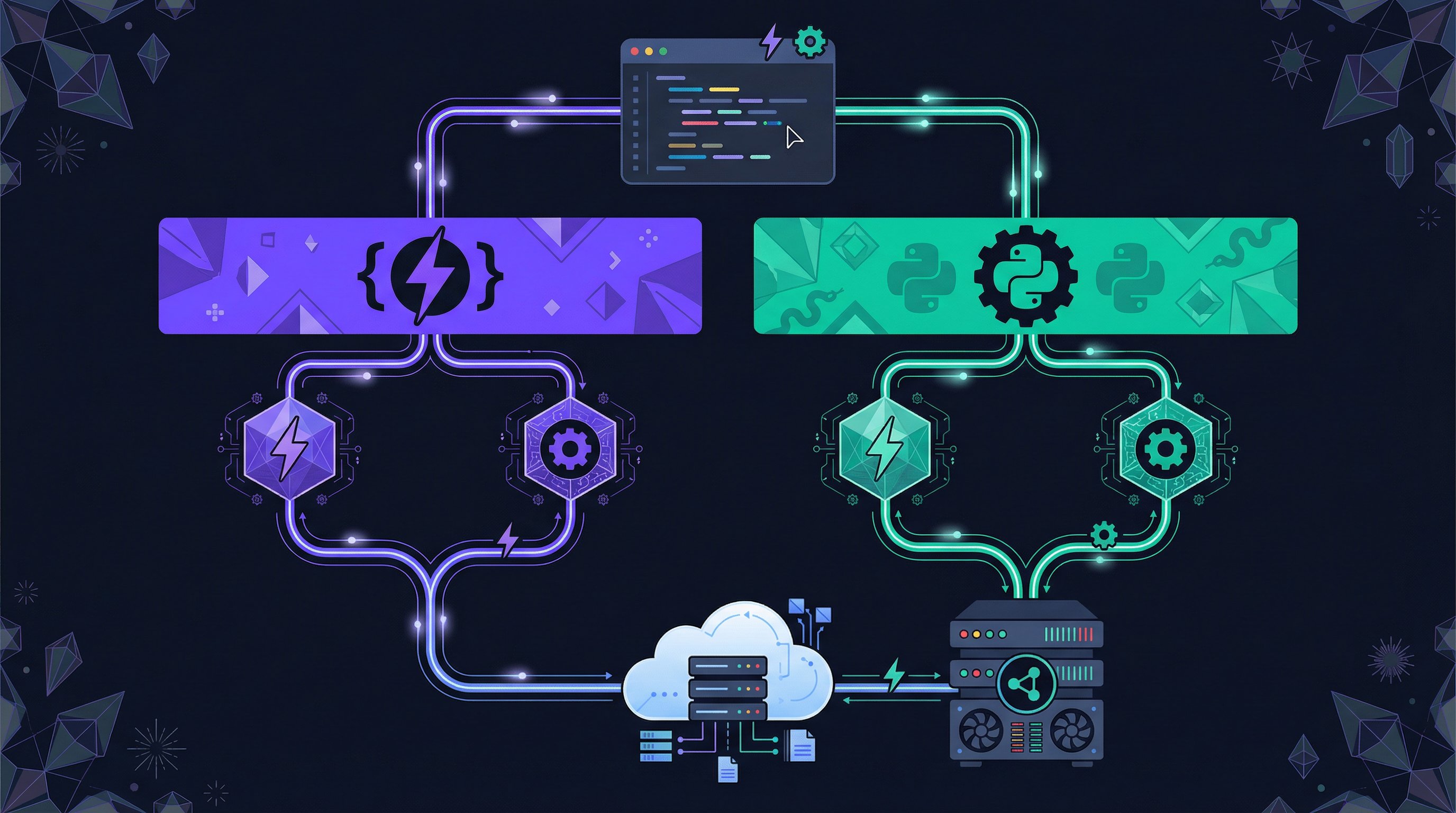
Two packages sit between an application and the protocols. Both are consumed by our own clients on exactly the same terms as by an external integrator.kaleido-sdk
Swap integration: quotes, pairs, RFQ streaming, swap execution, LSPS1 channel orders, and direct RGB Lightning Node access. TypeScript and Python today, with a Rust core in progress.
wallet-engine
Headless multi-protocol wallet core: protocol adapters, a cross-protocol router, unified receive, and lite/advanced disclosure. TypeScript, runs on browser, React Native, and Node hosts.
kaleido-sdk exposes two sub-clients — client.maker for the market side and client.rln for node operations — and generates its types from the same OpenAPI specifications that the backend serves, so TypeScript and Python never drift apart.
Protocol layer
Every Bitcoin Layer ships its own SDK, address formats, and quirks: channel liquidity here, boarding transactions there, static receive addresses somewhere else. Left unmanaged, that becomes a protocol check on every screen of every app. Instead, each protocol implements one adapter contract: connect, list assets and transactions, create and decode invoices, send, receive, and optionally quote and execute swaps. Differences between protocols live as data in a capability manifest, not as branches in application code. The router and the UI read that manifest and never special-case a protocol by name. The practical consequences:- Adding a protocol touches one adapter and one manifest entry — never another protocol’s path.
- Clients call one API, never a protocol SDK directly, so behaviour is consistent across Desktop, Extension, and Mobile.
- The router picks the rail. Given a destination — a Lightning invoice, a Bitcoin address, an RGB invoice, a Liquid address — it resolves which protocols can pay it and which is best.
- One receive QR can carry several protocols at once, so any wallet can pay it while KaleidoSwap wallets read the richer parameters.
Swap engine
Swaps use a Request for Quote model settled by hash-locked contracts. The maker prices the trade; Lightning carries it; the shared preimage makes it atomic.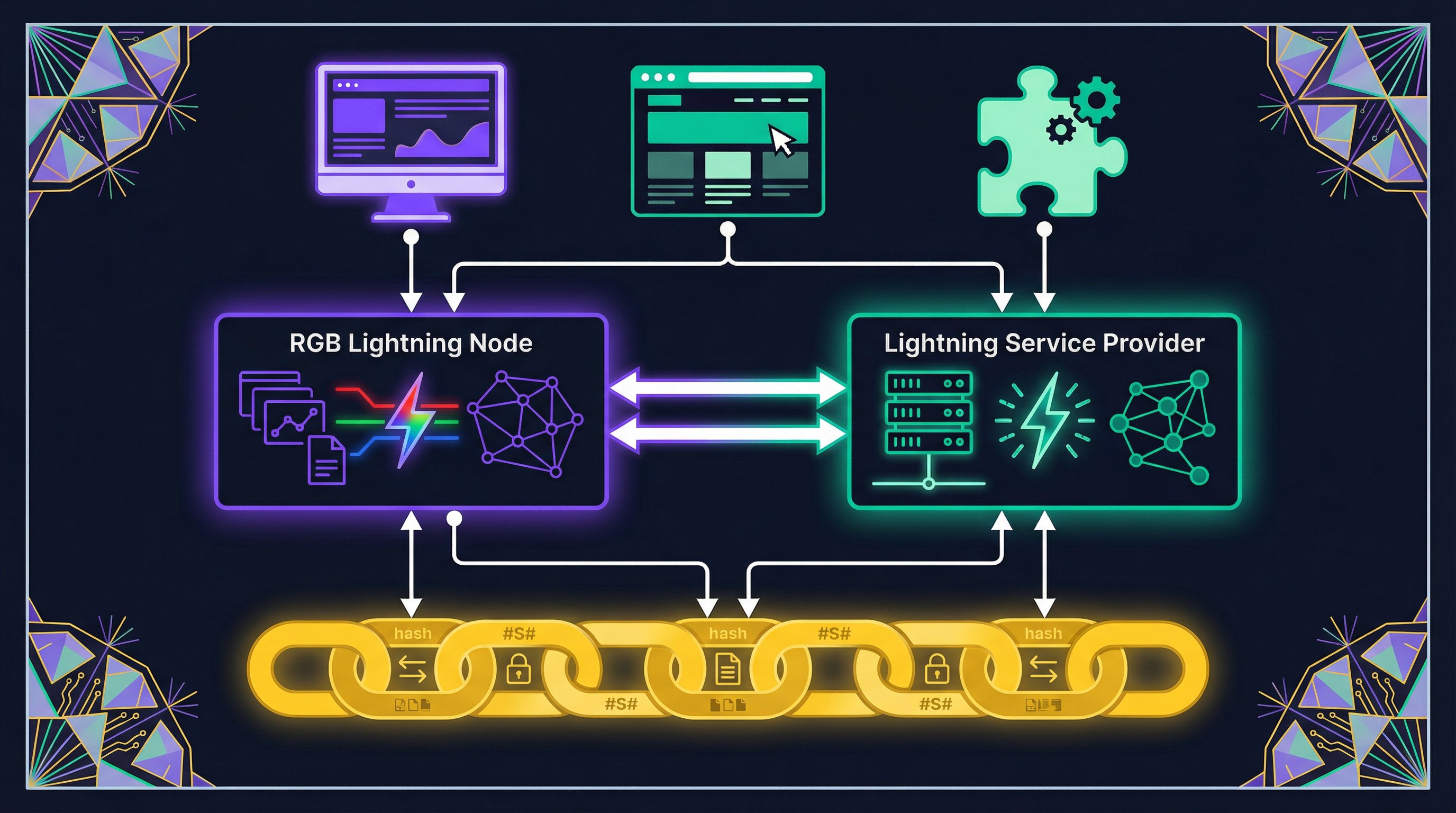
- The taker streams quotes from the maker over WebSocket and receives an
rfq_idwith each one. POST /api/v1/swaps/initlocks the rate and returns aswapstringand apayment_hash.- The taker’s RGB Lightning Node whitelists the
swapstring, authorising it to route through the node. POST /api/v1/swaps/executestarts the HTLC.- Lightning routes it: the maker reveals the preimage to claim one leg, which simultaneously releases the other.
- If either side stalls, the timelocks expire and both sides recover their own funds.
Atomicity depends on both layers having a native hashlock. See Where atomicity holds for what that rules in and out today.
Liquidity layer
Lightning Service Providers
LSPs make Lightning usable without manual channel operations. In the architecture they:- Provide liquidity — open channels with inbound capacity, optionally pre-loaded with an RGB asset
- Route payments — find paths for both payments and swap legs
- Act as counterparty — locking the other leg of a swap
RGB-LSPS1
KaleidoSwap implements the RGB Lightning Service Provider Specification, extending the standard LSPS1 channel-ordering flow to assets:- Standardised interface — one API shape for LSP interactions
- Asset allocation — specify RGB assets when ordering a channel
- Swap support — atomic swap coordination built into the same surface
- Fee transparency — costs stated before you commit
Market makers
The RFQ engine is designed for competition on the maker side. Today the KaleidoSwap LSP bootstraps liquidity itself. From 2027, external market makers connect through the same interface and compete on spread.Intelligence layer
The AI surfaces are clients of the same stack. They call the same tools a human interface calls, with the same confirmation gates.KaleidoMind
Local-first reasoning and tool-calling engine. Inference runs on-device; every fund-moving tool requires explicit confirmation, which the model cannot bypass.
KaleidoAgent
Autonomous agent for portfolio and node management. Runs against a local model or a hosted one, and never takes custody.
Client architecture
Non-custodial design
Everything that touches keys runs on your device. Clients hold or drive the wallet locally, validate state themselves, and talk to makers and LSPs only over the network interfaces above. No third party has access to your funds at any point in a swap.- Your keys, your coins — private keys never leave your device
- Encrypted storage — sensitive data encrypted at rest with your password
- No custody — makers and LSPs are counterparties, never custodians
- Client-side validation — you validate RGB state yourself rather than trusting a server
Protocol coverage per client
Component layers
Inside a client the separation is the same regardless of platform:- UI layer — the interface, per platform
- Business logic — state management and workflow orchestration
- Protocol layer —
wallet-engineadapters and the cross-protocol router - Network layer — node RPC, maker APIs, LSP integration, P2P connections
Security model
1
Bitcoin base layer
Final settlement and security anchoring on the Bitcoin blockchain
2
Layer protocols
Hash-locked contracts and timelocks, so a failed swap refunds rather than half-executes
3
Asset overlay
Client-side validation of RGB state, preventing invalid or double-spent transfers
4
Application layer
Local key management, encrypted storage, and explicit confirmation before any spend
What trustless means here
- No counterparty risk — on atomic paths the swap completes on both sides or neither
- No custodians — you keep your keys and your assets throughout
- Cryptographic guarantees — enforced by timelocks and preimages
Settlement characteristics
Different layers make different trade-offs, which is why the stack uses several. There is no layer that is fastest, cheapest, and most final at once.
Lightning is where trading happens because it settles in seconds at negligible cost; Bitcoin L1 is where positions come to rest. The hashlock column is what decides whether a leg can be atomic, and under whose guarantee — see Where atomicity holds.
RGB asset interfaces
RGB defines several asset interfaces, previously known by their schema numbers. The wallet supports all four; trading covers NIA assets today.
Definitions for each term are in the Glossary.